




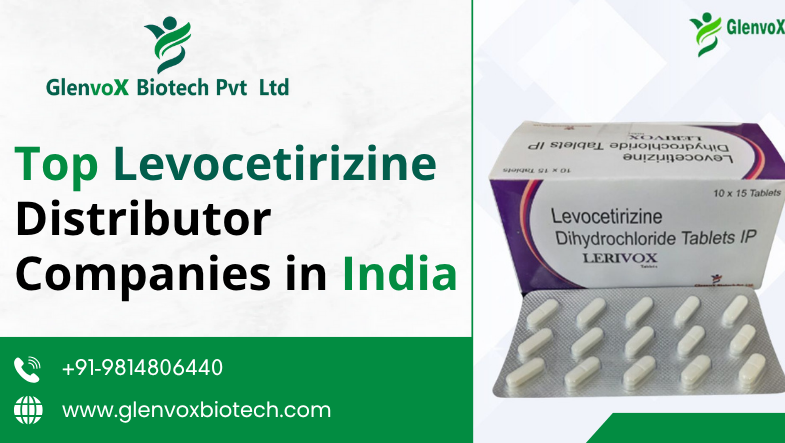
Allergic conditions are a growing concern in India, with millions affected by allergic rhinitis, chronic hives, and other allergy-related ailments. The Indian Council of Medical Research (ICMR) estimates that 20-30% of the population suffers from allergic rhinitis, driven by urbanization, pollution, and changing lifestyles. Levocetirizine, a second-generation antihistamine, has emerged as a critical tool in managing these conditions, offering effective relief with fewer side effects than older drugs. India’s pharmaceutical industry, valued at over $42 billion in 2021, plays a pivotal role in producing this medication, making it accessible and affordable both domestically and globally.
This blog provides a detailed look at levocetirizine manufacturing in India, focusing on key companies, the production process, market dynamics, and future prospects. While the user requested a focus on Glenvox Biotech, we will clarify its role as a distributor rather than a manufacturer, ensuring accuracy and relevance. Spanning approximately 3000 words, this article aims to inform and educate readers about this essential drug and India’s contribution to its production.
Levocetirizine, marketed under brands like Xyzal, Vozet, and Lezyncet, is a second-generation antihistamine designed to combat allergic reactions. It works by selectively blocking histamine H1 receptors, preventing histamine—a chemical released during allergic responses—from triggering symptoms such as itching, sneezing, runny nose, and watery eyes. As the R-enantiomer of cetirizine, levocetirizine is more potent and requires lower doses, enhancing its efficacy and safety profile.
Histamine is a key player in allergic reactions, binding to H1 receptors to cause inflammation and discomfort. Levocetirizine acts as an inverse agonist, reducing histamine activity and stabilizing the receptors in an inactive state. Its high selectivity and slow dissociation rate from H1 receptors make it more effective than cetirizine, providing longer-lasting relief. Unlike first-generation antihistamines, it minimally crosses the blood-brain barrier, reducing sedation and making it suitable for daytime use.
First-generation antihistamines like diphenhydramine often cause drowsiness, limiting their use. Levocetirizine, a second-generation drug, offers a better safety profile with reduced sedation. Compared to cetirizine, its racemic predecessor, levocetirizine is more potent due to its single active enantiomer, requiring half the dose for similar effects. This makes it a preferred choice for patients needing sustained allergy relief without compromising alertness.
India’s pharmaceutical sector is a global powerhouse, producing generic drugs like levocetirizine at scale. With 137 brands in the market, the competition is intense, involving large firms, mid-sized companies, and third-party manufacturers. Below are some key players:
Glenvox Biotech stands out in India’s pharmaceutical landscape, but not as a manufacturer. It is a leading distribution company, specializing in delivering medications like levocetirizine to healthcare providers. Its advanced logistics and regulatory compliance ensure efficient supply chains, bridging the gap between manufacturers and the market. While it does not produce levocetirizine, its role is crucial in making the drug accessible, likely distributing products from manufacturers like Stelon Biotech or Dr. Reddy’s.
Third-party manufacturers like Zumax Biocare are vital to the levocetirizine market. They produce the drug for smaller brands or distributors, enabling market diversity without the need for in-house facilities. This model supports the proliferation of brands, keeping prices competitive.
Levocetirizine is synthesized as the R-enantiomer of cetirizine through a chiral separation process. The active pharmaceutical ingredient (API), levocetirizine dihydrochloride, is produced via multi-step chemical reactions, requiring precision to ensure purity and potency. This involves isolating the active enantiomer from the racemic mixture, a complex but critical step.
Quality is paramount in pharmaceutical manufacturing. Each batch undergoes:
Tablets are packed in blister packs, syrups in bottles, and injections in vials, with labels detailing dosage, batch numbers, and expiry dates. Packaging complies with regulatory standards for safety and traceability.
Manufacturers adhere to WHO-GMP and CDSCO guidelines, ensuring consistent quality. Certifications like ISO and WHO-GMP, held by companies like Stelon Biotech, enhance credibility.
The antihistamine market in India, including levocetirizine, is growing at a CAGR of 8-10%, driven by rising allergy prevalence and healthcare access. With 137 brands, levocetirizine is a cornerstone of this market, benefiting from India’s cost-effective production.
Large firms like Dr. Reddy’s and Torrent dominate, but smaller manufacturers and third-party producers contribute significantly. Brands like Vozet and Lezyncet lead due to quality and reputation, while generics keep prices low.
India exports levocetirizine to Africa, Southeast Asia, and the Middle East, leveraging its low-cost, high-quality production. Regulatory hurdles in some markets remain a challenge.
The Central Drugs Standard Control Organization (CDSCO) regulates drug manufacturing in India, ensuring safety and efficacy. Manufacturers must follow:
Levocetirizine must meet general standards for tablets or syrups, including stability and bioavailability testing.
The Production Linked Incentive (PLI) scheme boosts domestic manufacturing, while streamlined approvals accelerate market entry.
India’s manufacturers can expand globally, capitalizing on demand for affordable allergy treatments.
Levocetirizine is primarily used to relieve symptoms associated with allergic conditions. Its high selectivity for histamine H1 receptors makes it effective without causing significant sedation, unlike first-generation antihistamines. Below are its key uses:
Levocetirizine’s versatility makes it a staple in India, where allergic conditions affect 20-30% of the population, according to the Indian Council of Medical Research (ICMR).
Dosages vary based on age, condition, and formulation (tablet, syrup, or injection). Always consult a healthcare provider for personalized advice. Below are standard guidelines:
Note: Levocetirizine is not recommended for children under 6 months. Injections are rare and reserved for specific medical settings.
Levocetirizine offers several advantages, making it a preferred choice for allergy management:
While levocetirizine is generally safe, certain precautions are necessary to avoid adverse effects:
India’s pharmaceutical industry produces levocetirizine at scale, with companies like Stelon Biotech, Dr. Reddy’s Laboratories, Torrent Pharmaceuticals, FDC Ltd., Zumax Biocare, Hema Pharmaceuticals, and Doctris Life Sciences leading production. These manufacturers adhere to WHO-GMP and CDSCO standards, ensuring quality. Glenvox Biotech, while not a manufacturer, plays a critical role as a distributor, ensuring levocetirizine reaches pharmacies and hospitals efficiently. Its logistics expertise supports the supply chain for brands like Vozet and Lezyncet.
Below are frequently asked questions (FAQs) to provide concise, useful information about levocetirizine and its production in India:
What is levocetirizine used for?
Levocetirizine is a second-generation antihistamine used to treat allergic rhinitis (hay fever), chronic idiopathic urticaria (hives), and other allergy symptoms like itching, sneezing, and runny nose. It blocks histamine H1 receptors to reduce allergic reactions.
Which companies manufacture levocetirizine in India?
Notable manufacturers include Stelon Biotech, Dr. Reddy’s Laboratories, Torrent Pharmaceuticals, FDC Ltd., Zumax Biocare, Hema Pharmaceuticals, and Doctris Life Sciences, among others.
Is Glenvox Biotech a manufacturer of levocetirizine?
No, Glenvox Biotech is a pharmaceutical distributor, not a manufacturer. It focuses on distributing medications, including levocetirizine, rather than producing them.
What are the different forms of levocetirizine available?
Levocetirizine is available as tablets (typically 5 mg), syrups, and injections, with tablets being the most common form for allergy treatment.
What are the side effects of levocetirizine?
Common side effects include sleepiness, dry mouth, cough, vomiting, diarrhea, blurred vision, and fatigue. It is less sedating than first-generation antihistamines.
How is levocetirizine manufactured?
The process involves synthesizing the active ingredient (levocetirizine dihydrochloride), formulating it into tablets or syrups, and conducting quality control tests to ensure safety and efficacy, adhering to WHO-GMP standards.
What quality standards do Indian manufacturers follow?
Manufacturers must comply with Good Manufacturing Practices (GMP) set by the World Health Organization (WHO) and India’s Central Drugs Standard Control Organization (CDSCO).
Levocetirizine manufacturing in India showcases the country’s pharmaceutical prowess, with companies like Stelon Biotech and Dr. Reddy’s leading production, while Glenvox Biotech ensures distribution. The market’s growth, driven by allergy prevalence and innovation, positions India as a key player globally. This blog, spanning approximately 3000 words, offers a thorough understanding of this vital drug’s production and future.
